
1
Capture
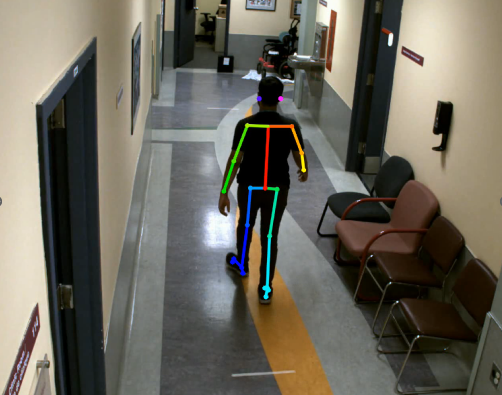
A person walks through the calibrated hallway capture area while synchronized cameras record video.
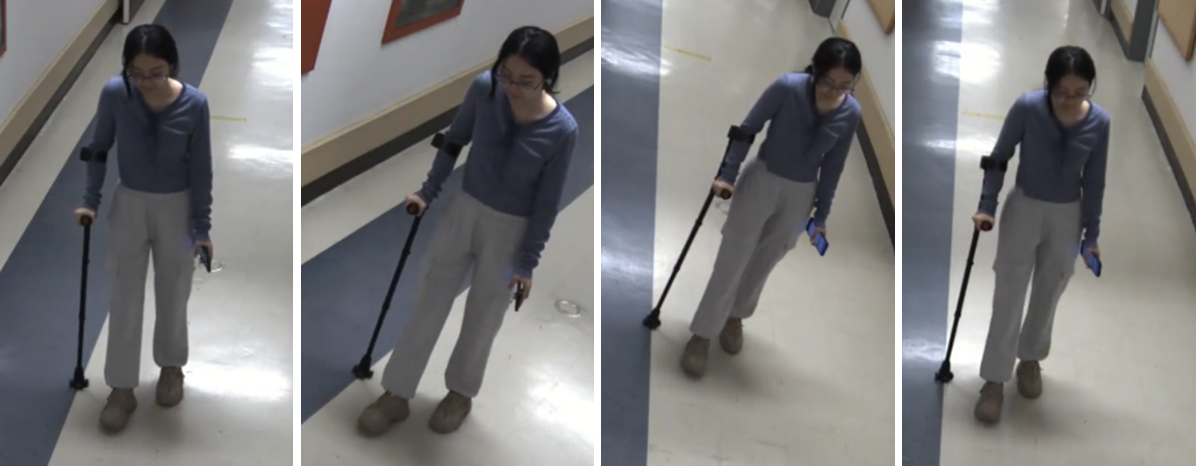
Smart Hallway is a markerless motion analysis system designed for clinical and institutional spaces. This system captures walking trials and automatically applies AI-based pose detection, reconstructs 3D body movement, and provides clinically useful outcome measures with a workflow built for real-world care settings. While working well in institutional hallways, Smart Hallway can be used in rooms or other spaces with appropriate walkway length.
Extends motion analysis beyond specialized gait labs.
Supports workflows that fit within routine clinical visits.
Automates processing and reporting to support interpretation.
Enables assessment close to where patients are already seen.
A person walks through the calibrated hallway capture area while synchronized cameras record video.
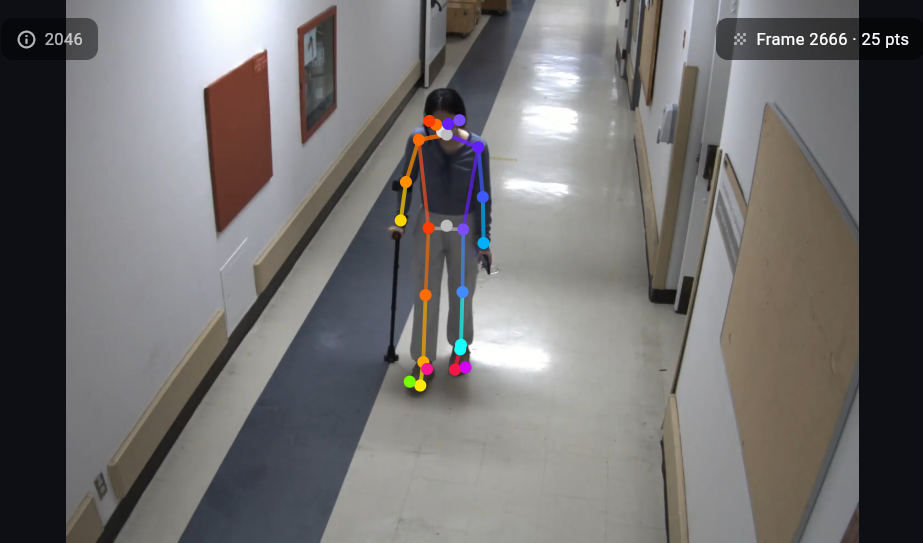
AI pose estimation identifies body keypoints from each camera view.
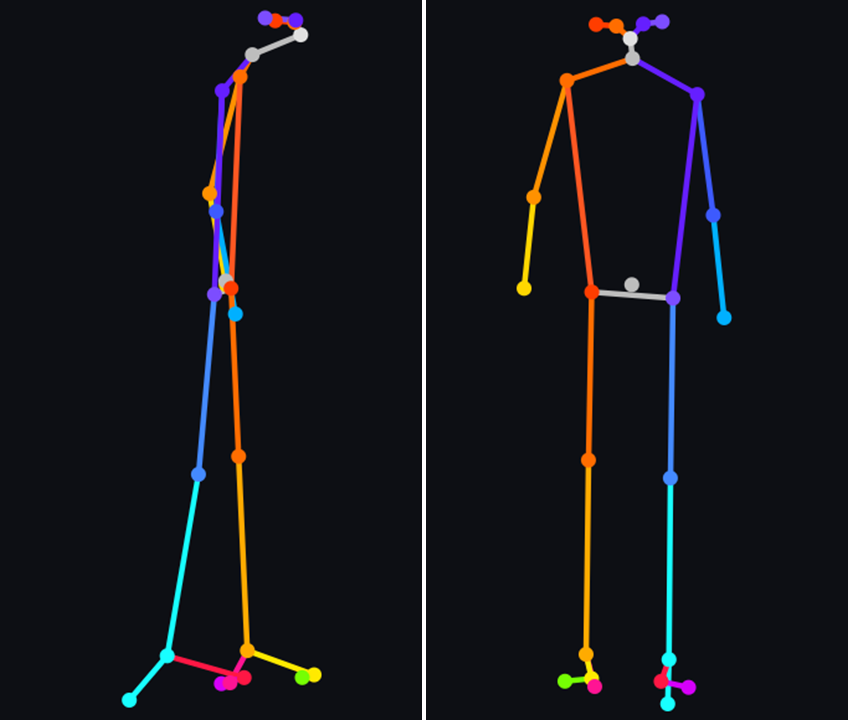
Keypoints from multiple views are combined to generate 3D body pose data.
Custom software processes the 3D data and extracts gait and movement outcome measures.
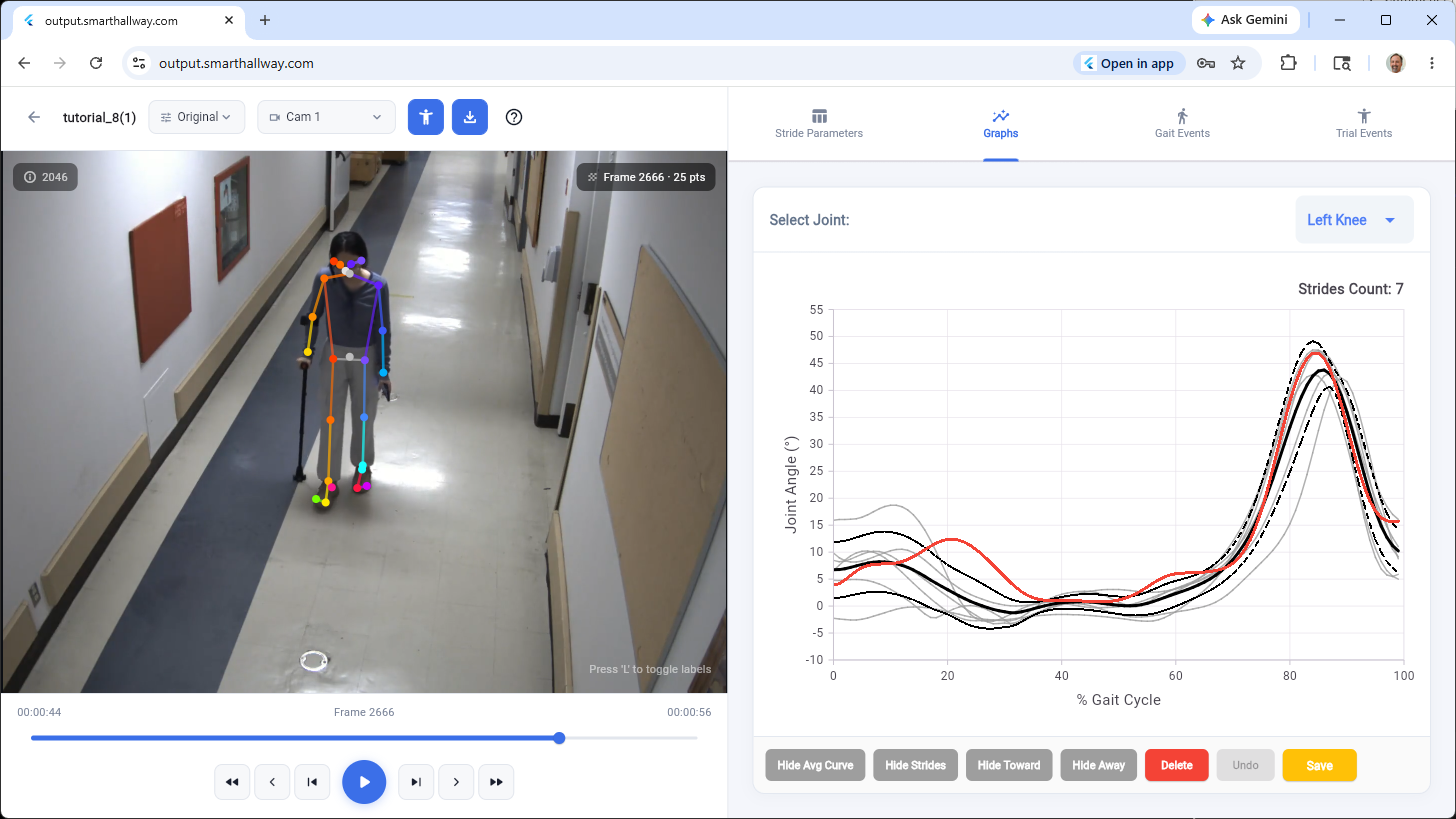
Results are available in minutes for review by clinicians, researchers, and authorized users.
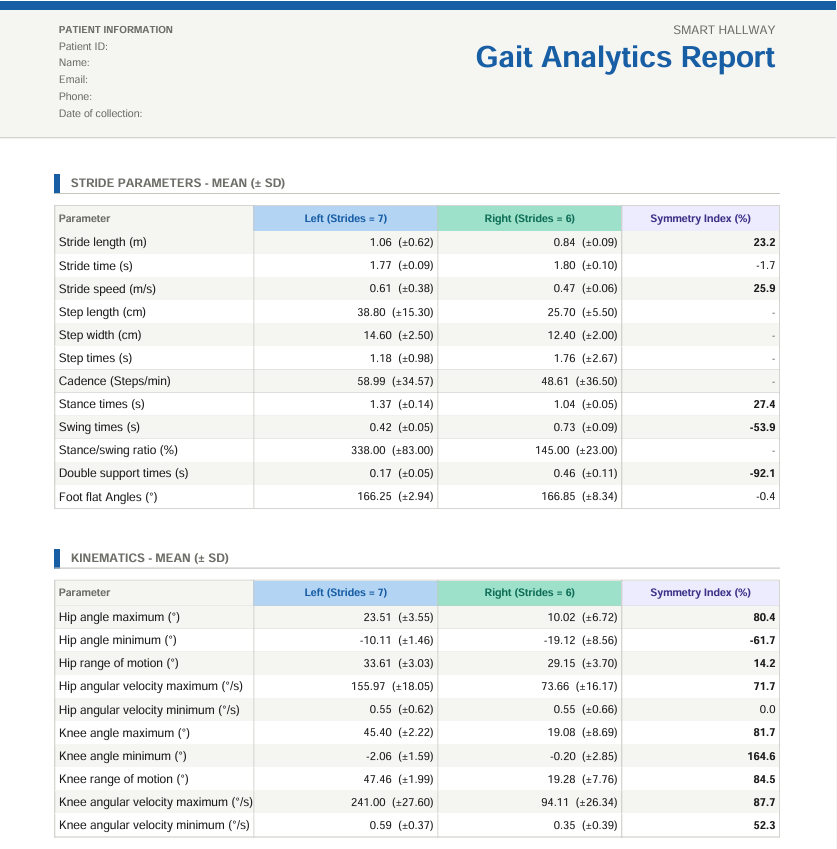
Support clinical interpretation and AI-assisted decision-making with evidence-based tools.
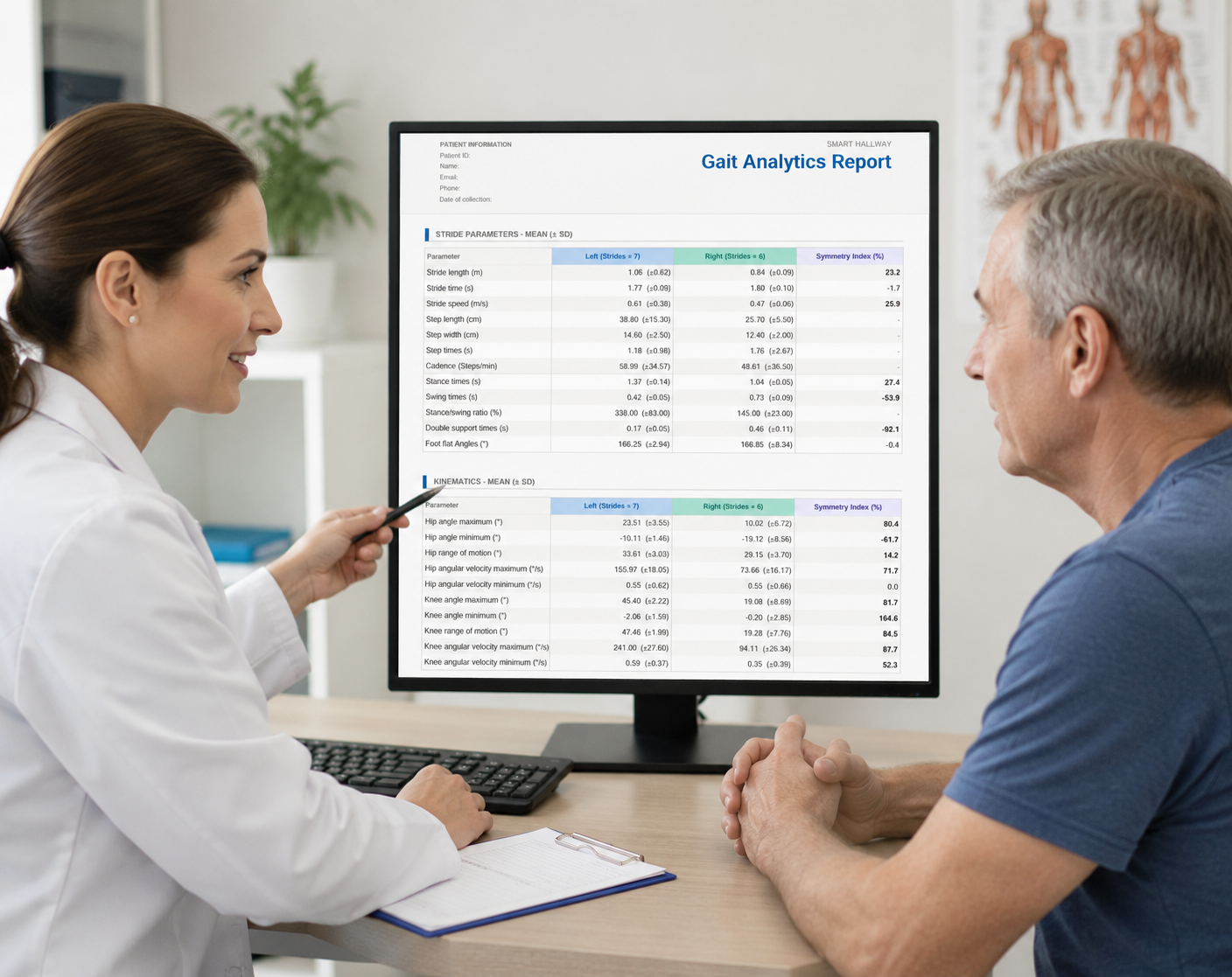
Smart Hallway adds cameras and AI-based analysis to a clinical hallway so that movement can be captured, processed, and reported near the point of patient contact.
Measure stride-related outcomes and review walking patterns during routine care visits.
Track progress over time and support discussions around treatment or prosthetic adjustments.
A resident's movement status can be evaluated as they walk through a regularly used hallway.
Use hallway-based movement datasets to validate methods and build new clinical AI tools.
Explore the literature page for supporting publications, visit the tutorials page for user-facing walkthroughs, or contact the Smart Hallway team for help, demos, or collaboration inquiries.